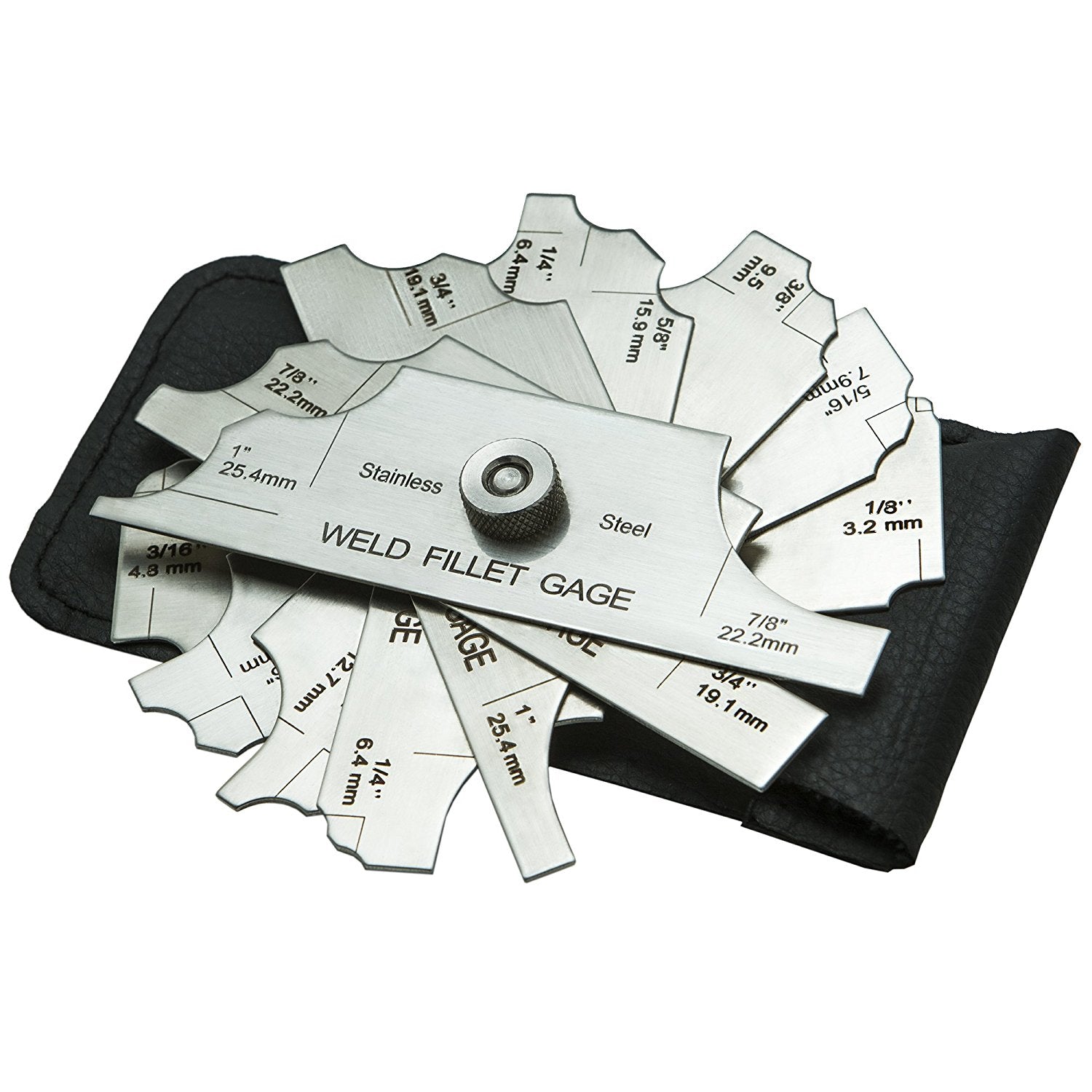
Gauge Fillet Weld Specifications: Guaranteeing Quality and Compliance
Innovative Approaches to Fillet Weld Assessment and Screening: Enhancing Weld Top Quality and Conformity Criteria
In the realm of welding, the top quality and integrity of fillet welds play a vital duty in making sure the structural soundness and reliability of different commercial components. With the consistent drive for enhanced efficiency and compliance with rigorous requirements, the expedition of ingenious approaches to fillet weld assessment and screening has ended up being imperative.
Advanced Non-Destructive Screening Methods
Making use of state-of-the-art modern technologies, advanced non-destructive testing approaches play a vital duty in ensuring the honesty and quality of fillet welds. These methods, such as phased variety ultrasonic screening (PAUT) and magnetic fragment screening (MPT), offer thorough understandings into the weld's internal structure without triggering any damages to the product. PAUT, for circumstances, makes use of several ultrasonic components to examine the weld from different angles, providing an extensive visualization of possible defects like lack of combination or splits.
Similarly, MPT works in discovering surface-breaking defects by applying an electromagnetic field and iron bits to the weld location. This approach is specifically useful for determining stoppages that may compromise the weld's strength. By employing these sophisticated non-destructive screening strategies, weld inspectors can accurately evaluate the high quality of fillet welds, making sure conformity with sector criteria and laws. The ability to spot problems early on not only improves weld top quality but also prevents costly rework or failings in structural honesty, highlighting the importance of these ingenious testing approaches in welding inspections.
Robotics and Automation in Assessment

The integration of robotics and automation has actually reinvented the examination procedure for fillet welds, enhancing performance and accuracy in top quality evaluation. Robotics offer specific control and repeatability in examining welds, ensuring reliable and regular results. Automated systems can be set to follow details assessment paths, making sure detailed coverage of welds and minimizing the threat of human mistake.
Robot examination systems furnished with sophisticated sensors can identify and measure weld functions with high accuracy, offering detailed information for evaluation. These systems can recognize defects such as cracks, lack of combination, and porosity, allowing punctual rehabilitative activities to be taken. In addition, robotics and automation enable real-time data collection and analysis, offering immediate comments to operators and promoting fast decision-making procedures.
In addition, making use of robotics and automation in fillet weld inspection improves overall productivity by decreasing assessment times and increasing evaluation throughput. By improving the evaluation process, producers can guarantee weld high quality and conformity standards are satisfied efficiently, ultimately leading to set you back financial savings and improved product top quality.
Making Use Of Expert System for Evaluation
Expert system plays a critical role in boosting the effectiveness and accuracy of analysis in fillet weld assessment procedures. By harnessing the power of AI, inspectors can streamline the analysis of weld high quality and conformity requirements, causing much more accurate and reputable results. AI formulas can quickly refine substantial amounts of data from weld examinations, finding problems or inconsistencies that may be testing to understand the naked eye. This innovative modern technology enables real-time surveillance of weld quality, enabling immediate restorative actions to be taken if any type of problems are discovered.
Furthermore, AI systems can learn from past evaluation data, continually boosting their ability to determine prospective flaws and variances in fillet welds. This adaptive knowing ability this post enhances the total quality assurance process, reducing the likelihood of human mistake and making sure that welds meet the called for criteria. By integrating synthetic knowledge right into fillet weld analysis, industries can attain higher degrees of efficiency, uniformity, and compliance in their examination techniques.
Portable Equipment for On-Site Examination
Enhancing field evaluation performance, the adoption of portable tools changes on-site evaluation procedures for fillet welds. These devices use adaptability and ease, permitting assessors to carry out complete exams in different places, including remote or tough settings. Portable tools such as ultrasonic screening tools, magnetic bit evaluation equipment, and digital radiography systems provide real-time information and high-resolution imaging capacities, allowing quick decision-making and instant feedback on weld top quality.
One considerable advantage of portable tools is their ability to streamline evaluation treatments, minimizing downtime and enhancing total efficiency - Gauge Fillet Weld. Assessors can easily transport these devices to various work websites, eliminating the demand for delivering heavy equipment or elements to off-site centers. Furthermore, the mobility of these tools advertises cost-effectiveness by reducing transport expenditures and speeding up examination timelines
Furthermore, the usage of portable devices for on-site evaluation advertises proactive quality assurance steps, as assessors can immediately identify and address any type of potential welding issues or inconsistencies. By integrating these innovative modern technologies into on-site examination methods, welding specialists can ensure compliance with sector requirements and boost weld high quality, inevitably resulting in boosted structural integrity and safety and security in various welding applications.
Assimilation of Data Management Equipment

Having actually enhanced on-site evaluation processes via the usage of portable devices, the next stage includes the smooth assimilation of information monitoring systems to better improve performance and information evaluation capabilities in fillet weld examination and screening. By incorporating data monitoring systems into the examination process, companies can improve information collection, storage space, and analysis. This assimilation enables real-time surveillance of weld quality, instant recognition of problems, and punctual decision-making to rectify any issues that may emerge throughout the assessment process.
Information management systems play a crucial function in streamlining examination data, assisting in very easy access for licensed workers, and ensuring information integrity and safety. Via the combination of these systems, assessors can create detailed records, track historic information for trend analysis, and boost overall process effectiveness. Moreover, the combination of information monitoring systems makes it possible for seamless communication between various stakeholders involved in the evaluation process, promoting partnership and improving general quality assurance procedures. Eventually, the assimilation of information monitoring systems offers to raise the requirements of fillet weld evaluation and testing, guaranteeing compliance with sector laws and enhancing weld high quality.
Verdict
In final thought, innovative strategies to fillet weld assessment and testing have actually substantially enhanced weld top quality and compliance criteria. Advanced non-destructive testing approaches, robotics, automation, man-made intelligence, mobile tools, and information administration systems have actually reinvented the way weld examinations are carried out. By utilizing these innovations, sectors can guarantee that welds meet the needed top quality criteria and regulations, inevitably boosting total effectiveness and safety and security in welding processes.
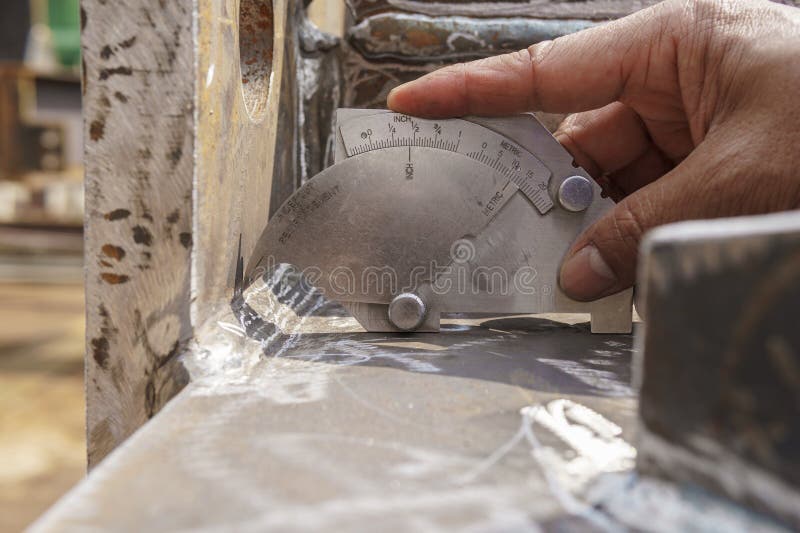
Having maximized on-site assessment processes via the use Continue of portable devices, the next stage includes the seamless assimilation of data monitoring systems to even more enhance performance and data evaluation abilities in fillet weld evaluation and screening. Eventually, the assimilation of data administration systems serves to elevate the criteria you could try this out of fillet weld assessment and testing, ensuring conformity with industry regulations and boosting weld high quality.